

Argentine ants are a common pest in Florida, known for their large colonies and invasive nature. This article will help you identify, prevent, and manage infestations, ensuring your home remains pest-free.
Key Takeaways
- Argentine ants are invasive pests that can take over your home and disrupt local Florida ecosystems.
- They’re drawn to sugary foods, moisture, and honeydew, so keeping things clean is a must.
- Stopping an infestation means sealing entry points, using baits, and keeping their habitats under control.
- Pest control professionals are here to help if Argentine ants invade—just give us a call!
What Are Argentine Ants?
Argentine ants are a type of ant species originally from northern Argentina. They are an invasive species and have established themselves in Florida and other parts of the United States. These ants are small, typically 1/8 inch in size, and dark brown to black.
One notable feature is their musty odor when crushed. They also form vast super-colonies with multiple queens, making them difficult to control.
Signs of an Argentine Ant Infestation
If you’ve got Argentine ants in your home or yard, you’ll likely notice a few telltale signs.
For starters, these ants tend to show up in large numbers, often traveling in trails to and from food sources or following their pheromone paths. They also love to nest near water, so you might find them around gardens, damp areas, or even inside walls and other structures.
One more thing to watch for—Argentine ants are aggressive competitors and will push out native ant species, which can throw off the balance of your local ecosystem.
How to Get Rid of Argentine Ants
Getting rid of Argentine ants takes a little strategy since you’re not just dealing with the ants you see but also their colonies.
Here are some effective ways to handle the problem:
- Baits: Use slow-acting ant baits designed for Argentine ants. Worker ants carry the bait back to the colony, targeting queens and larvae.
- Pest Management Techniques: Apply non-repellent products around nesting areas and entry points.
- Professional Pest Control Services: For severe infestations, call a licensed pest control service to assess and treat the problem effectively.
How to Prevent Argentine Ant Infestations
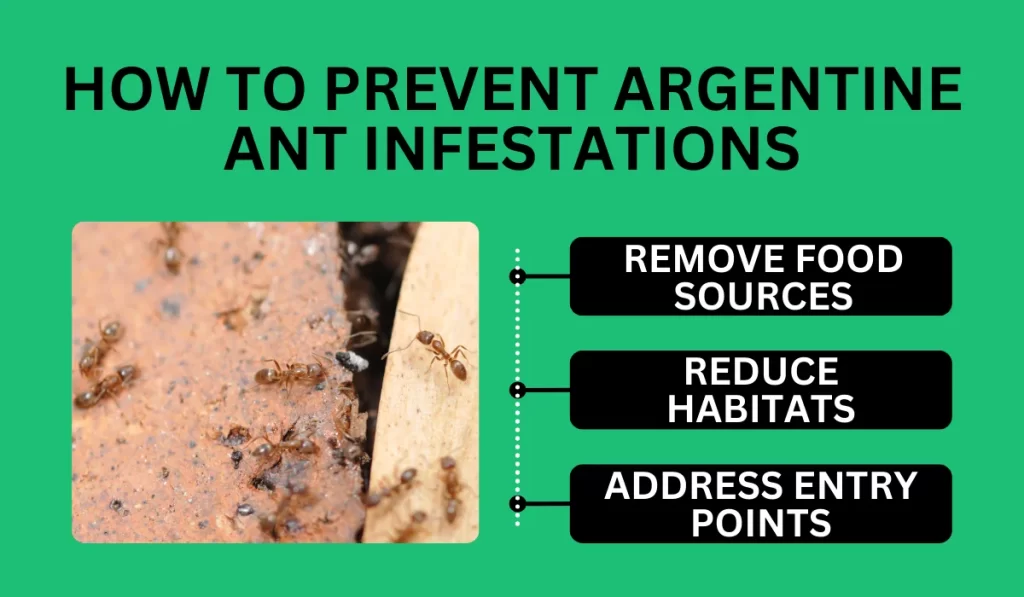
Remove Food Sources
Argentine ants won’t stick around if there’s nothing to snack on. Here’s how to cut off their food supply:
- Clean up crumbs and spills immediately.
- Store food in sealed containers.
- Manage garden pests like aphids to reduce honeydew.
Reduce Habitats
These ants are always on the lookout for the perfect nesting spot. Try these tips to make your home less inviting:
- Replace mulch with less hospitable materials like gravel.
- Seal cracks and crevices in walls and foundations.
- Ensure gutters and drains are clear to avoid excess moisture.
Address Entry Points
Argentine ants are small but resourceful, so sealing off how they’re getting inside is key. Focus on these areas:
- Inspect and seal windows, doors, and other entryways.
- Install weather stripping and door sweeps.
Act Now Before It’s Too Late
If you suspect an Argentine ant problem, don’t wait—contact Rowland Pest Management today. We specialize in effective Argentine ant control and offer free quotes to help you take the first step toward a pest-free home. Contact us today to schedule your consultation!
Frequently Asked Questions
Argentine ants can be tricky, but we’ve got you covered. Here are a few questions from Florida homeowners that go beyond the basics of identification and treatment.
How can I tell Argentine ants apart from other ants in my yard?
Argentine ants are dark brown and travel in long, steady lines. They also give off a musty smell when crushed. If you’re seeing large numbers around your home, especially near water or sugary foods, they’re likely Argentine ants.
Should I be worried about Argentine ants hurting my pets?
Not really! Argentine ants don’t sting or bite but can be a nuisance by contaminating pet food. Keep pet bowls clean and store food securely to avoid attracting them. If ants invade, we’re just a call away to help!
Can these ants damage my home?
Argentine ants don’t chew wood like termites, but they can nest in walls or near moisture, which might make small problems like leaks worse. If you notice them indoors, tackling the issue quickly is a good idea.